Quick answers
When insulating a bare roof slab from scratch, how are polyurethane foam, bitumen and pumped screed combined?
The system can be built either with the insulation under the screed (polyurethane foam sprayed on the slab, a bitumen layer, then pumped screed on top) or over the new screed (pumped screed for falls, bitumen primer, then sprayed foam).
When a flat roof is built up from the bare concrete slab — or after a complete strip-out — it needs thermal insulation, waterproofing and proper drainage falls formed with pumped screed.
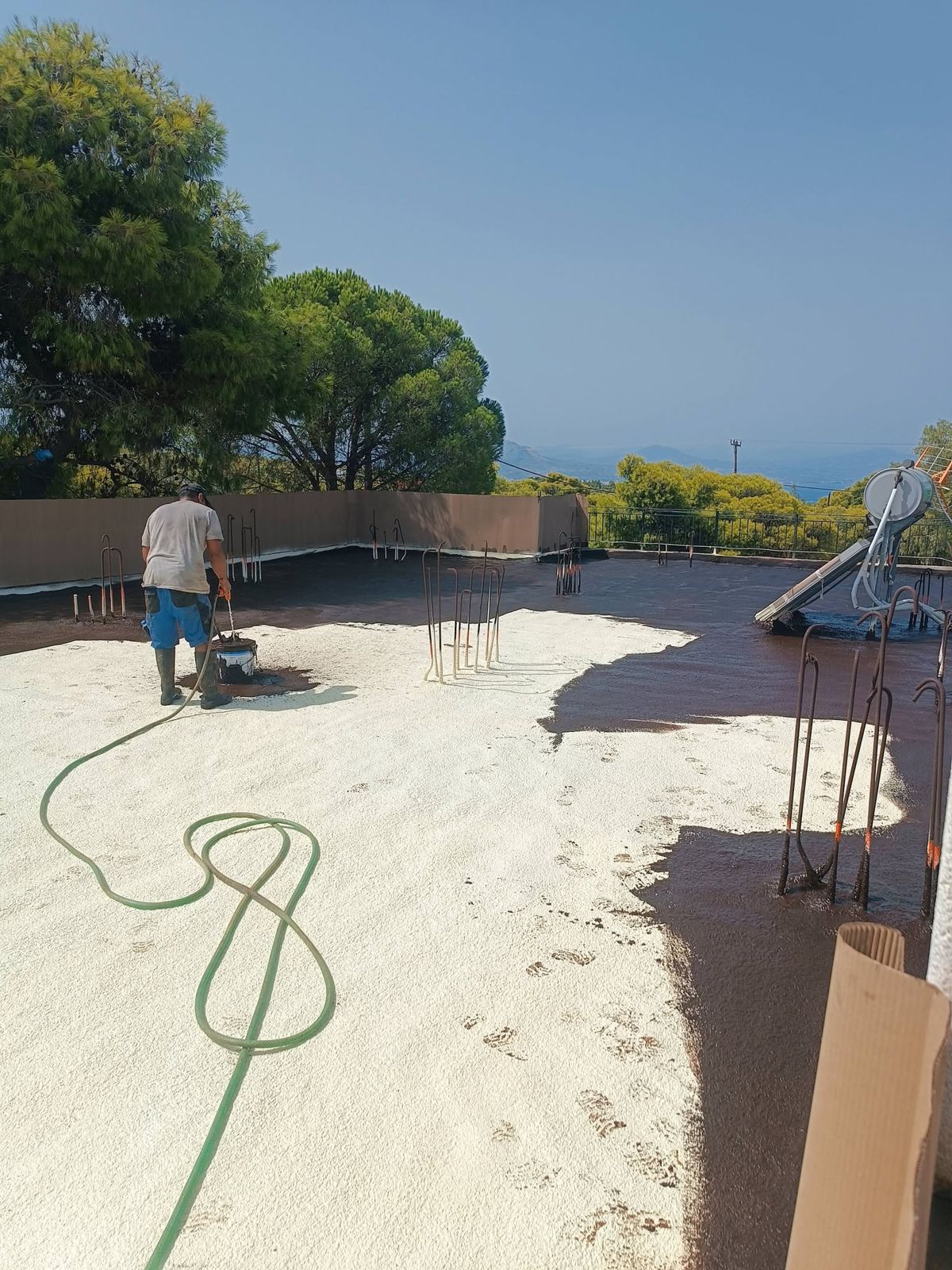
In the first build-up, polyurethane foam is sprayed directly onto the bare slab for thermal insulation, a bitumen layer is applied over it, and a concrete pump delivers the new screed on top, which is levelled with a straightedge to protect the insulation underneath and create a walkable floor.
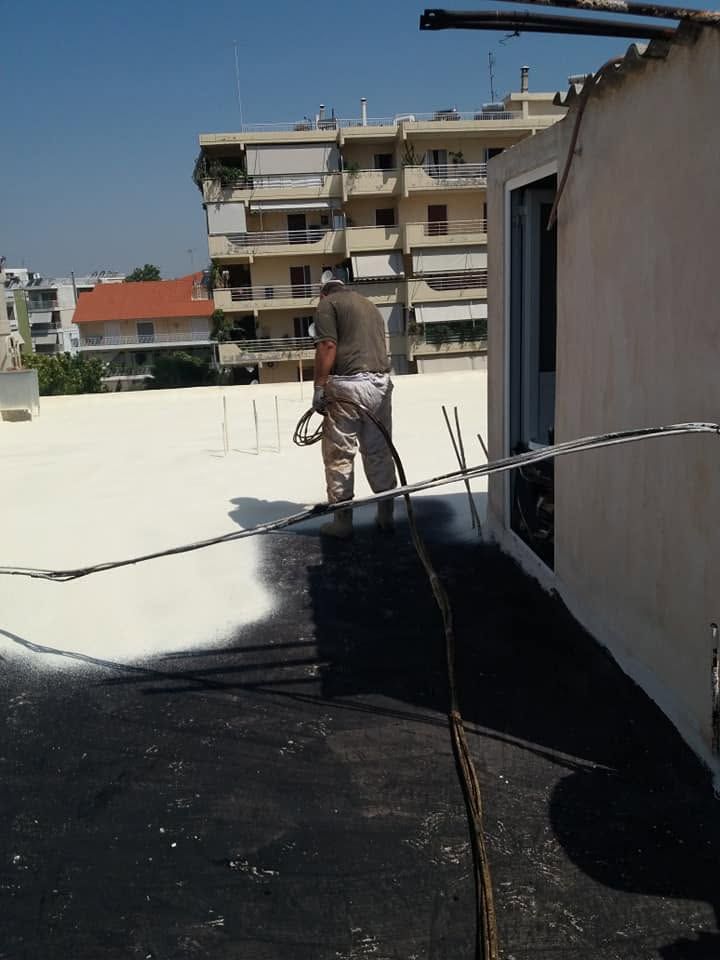
In the second build-up, where an existing roof lacks proper drainage slopes, the new screed is pumped and laid first to form the falls toward the drains. Once the screed has cured, it is coated with black bitumen primer and sprayed with polyurethane foam.
Jobs that show it
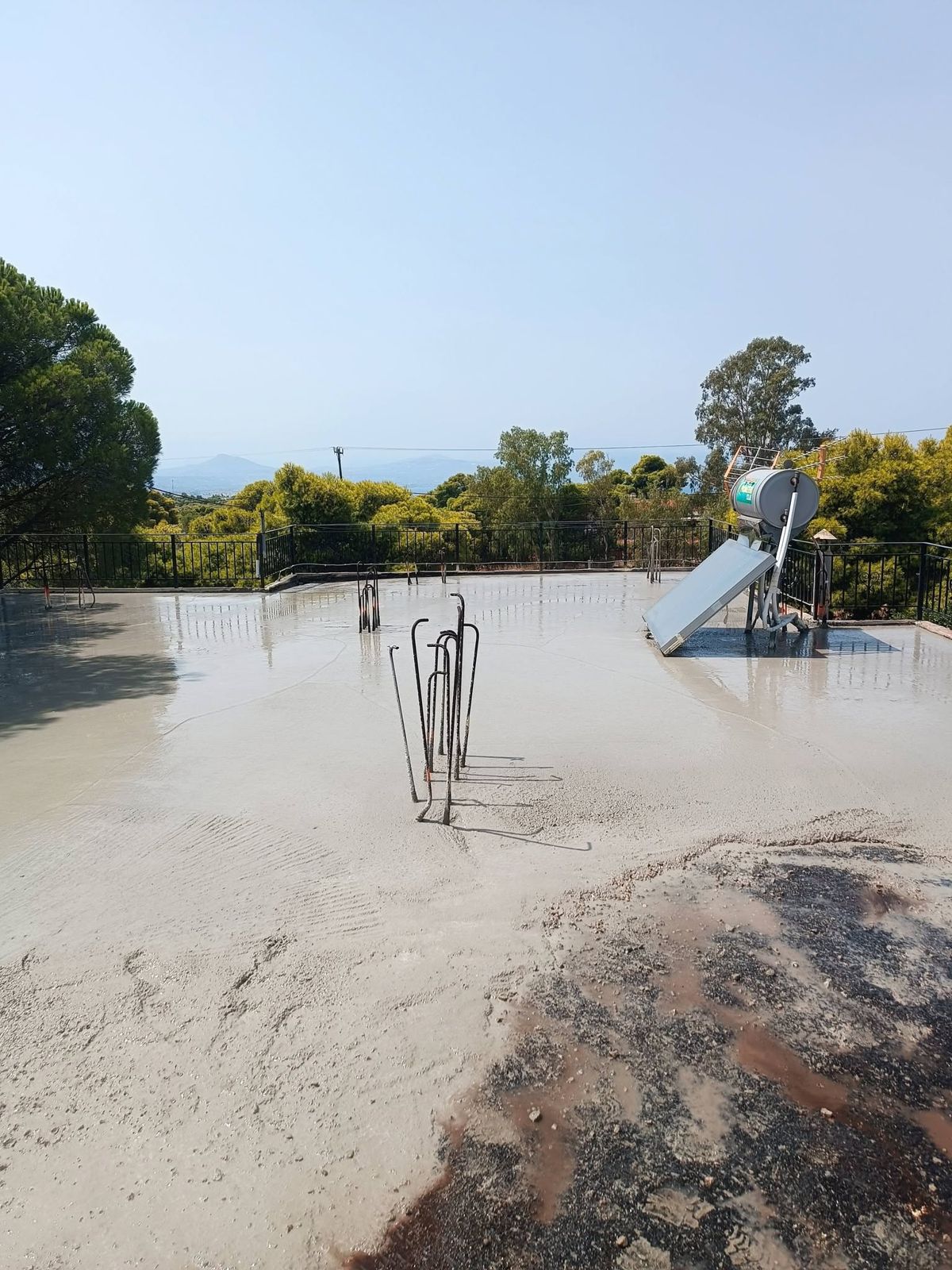
Roof Insulated with Spray Polyurethane Foam and a New Screed
A bare roof slab was sprayed with polyurethane foam, given a coat of tar, and covered with a new screed poured by a concrete pump.
See the job step by step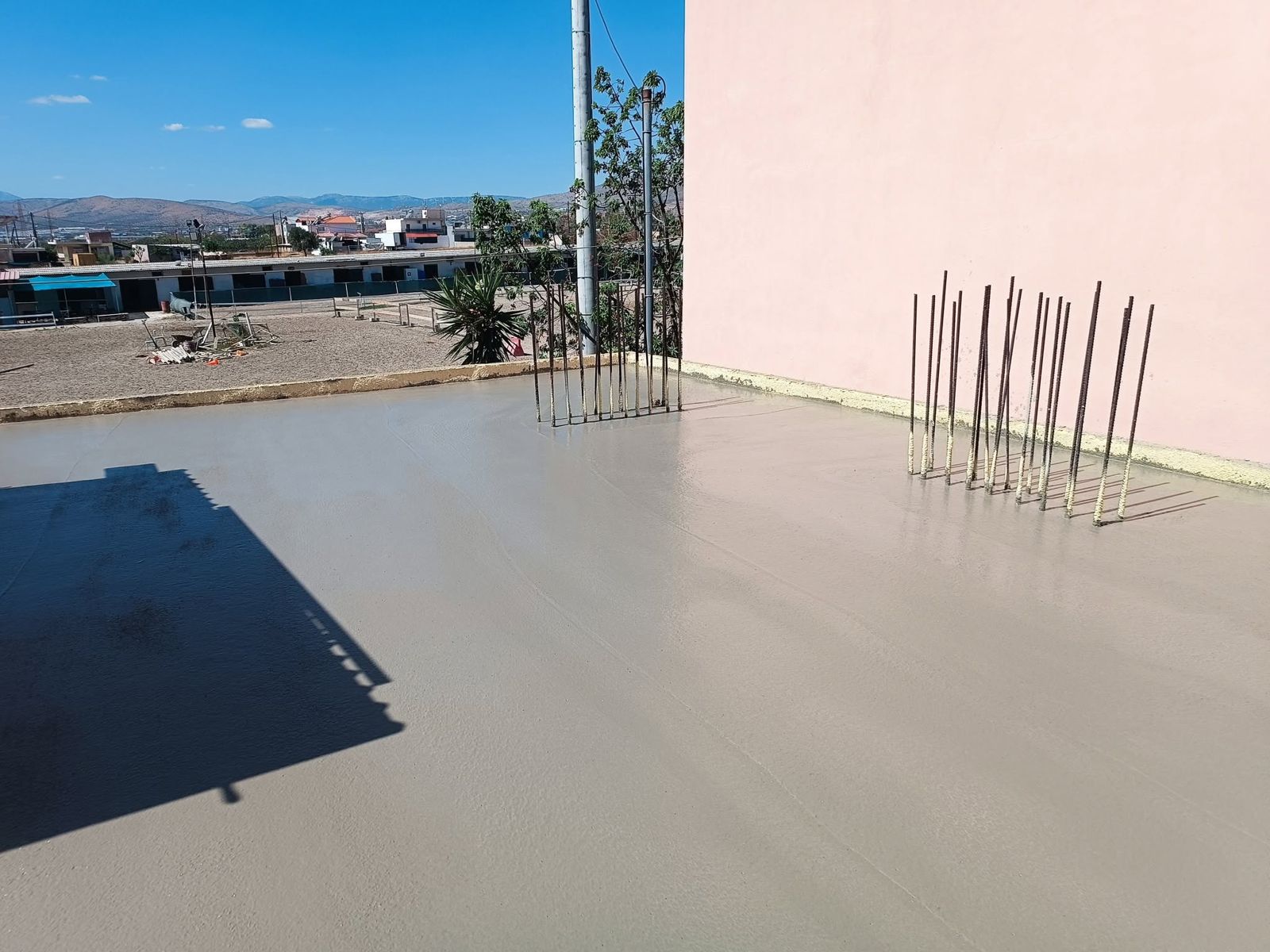
Roof Slab with Polyurethane Foam, Tar and a Screed
Spray polyurethane foam went along the edges of a roof slab, a coat of tar went over the whole surface, and a new screed was laid on top.
See the job step by step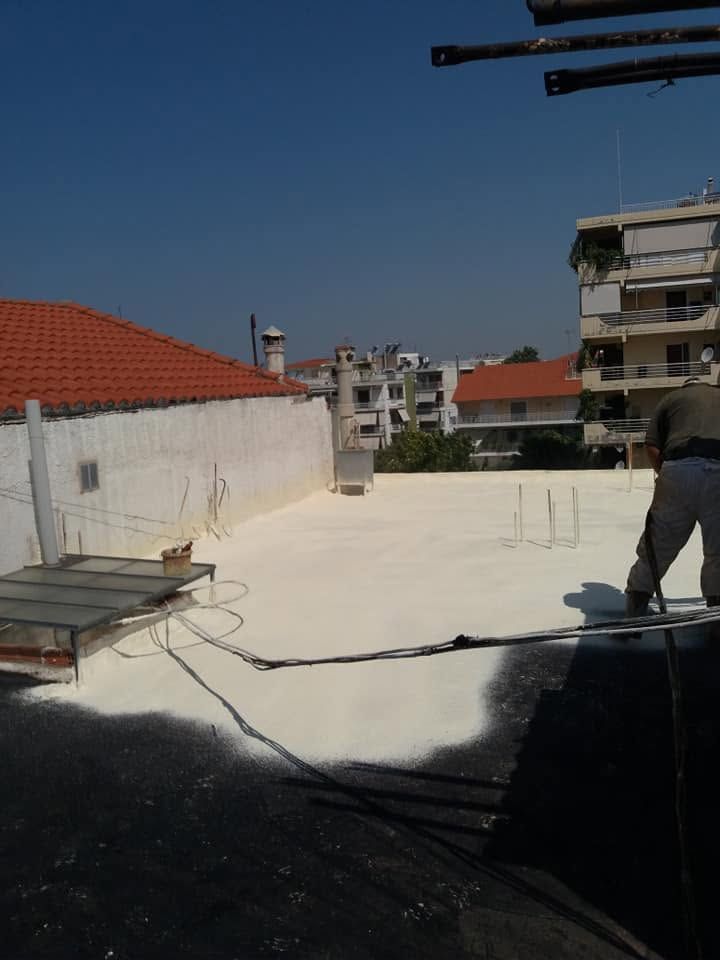
New Screed and Spray Foam Insulation on a Roof
The roof got a new pumped screed, a bitumen primer and finally a layer of sprayed polyurethane foam.
See the job step by step