AtticaPro
Knowledge Hub

Insulation & Waterproofing

Permanent solutions against humidity, with high-durability materials and 18 years of experience.

See the service

Quick answers

Why is my roof leaking when it has been waterproofed?Water rarely comes through the middle of a roof. It gets in where the waterproofing is interrupted: seams, the corner with the parapet, and the bases of posts, pipes and drains.Polyurethane foam or a liquid membrane: what's the difference?A liquid membrane keeps water out. Polyurethane foam insulates against heat and cold and keeps water out too, but it can't stand the sun and needs a protective coat on top.Can an old bitumen membrane be patched, or does it have to come off?If it is still stuck down and only seams or corners have opened, it can be repaired locally. If it has come loose, blistered or wrinkled over a large area, it all comes off before anything new goes on.Is it worth making my roof white? Does it really keep the home cooler?A white waterproof coating reflects much of the sun, so the roof and the floor below heat up less. It doesn't replace insulation, and it needs renewing once it gets dirty and worn.Can a balcony be waterproofed without breaking up the tiles?Often, yes: if the tiles are firmly stuck, they can be cleaned and covered with a waterproof coating. Any loose ones must come up first, because nothing holds on a crumbling base.Water pools on my roof after rain. Is that a problem?Yes. Water that sits in one place for days wears the waterproofing faster and finds every weak spot. The usual causes are hollows, poor falls, or blocked or worn drains.My metal roof leaks and gets scorching in summer. What can be done?Water usually gets in at the screws, the joints between sheets and the corner with the wall. Spray polyurethane foam with a white coat closes those spots and insulates against the heat.The flat above the pilotis has a cold floor. Can it be insulated?Yes, from below: the pilotis ceiling is the floor of the flat. It can be sprayed with polyurethane foam in one continuous layer, without touching anything inside the home.Does my roof need a new screed before it is insulated?Not always. A new screed goes down when the roof has hollows or poor falls, or after old layers are stripped. On a roof that is walked on, a screed can also go on top to protect the insulation.Asphalt membrane or liquid polyurethane: which is better for the roof terrace?Mineral-surfaced asphalt membrane offers superior mechanical resistance when the roof terrace is used frequently. Liquid polyurethane is lightweight, completely seamless, and seals perfectly around complex obstacles like solar water heaters, vent pipes, and corners.Can I add external wall insulation only on my balcony walls, without scaffolding the whole apartment building?Yes. Exterior walls facing your own balcony or terrace can be reached without scaffolding and insulated either with insulation boards and render or with sprayed polyurethane.Do solar water heaters, air conditioners and water tanks have to be removed to waterproof the roof?In most cases solar heaters and water tanks do not need to be disconnected. Air-conditioning units can be lifted onto blocks while liquid coatings or sprayed foam are worked right under the frames and around every support leg.How do you waterproof a flat roof that has solar panels or meets a tiled roof along one side?The old failed membrane is stripped from under the panels and along the tile edge, every support base is sealed individually, and the new waterproofing is carried right up to the tiled roof junction so runoff from the tiles cannot slip underneath.My built-in planter box on the terrace or by the pool is causing damp. How is it waterproofed from the inside?To waterproof a built-in planter properly, all plants and soil must be emptied out, the failed old lining removed, and new waterproof coats applied across the floor, the corners, the inside walls and around the drainage holes.Water leaks in around our roof skylight when it rains. Can the base be sealed without replacing the skylight?Most skylight leaks come not from the dome itself but from cracked mortar around its curb where it meets the roof slab. Breaking out the loose material and sealing the base with reinforced waterproof coating stops the leak without replacing the skylight.Damp on our ceiling shows up right under the terrace railings or columns. How are their bases sealed?Where metal railing posts or columns enter the floor or parapet, rigid mortar and tiles crack around them. A lasting repair means opening and cleaning the base, then sealing it with flexible waterproof coating reinforced with fabric that turns up onto the post.Our outdoor concrete stairs leak into the storage room or space underneath. How are the steps waterproofed?Outdoor stairs have many corners — treads, risers and the wall junction — where hairline cracks open up. After cleaning and surface preparation, brush-applied waterproof coats seal every step and landing as one continuous skin.Why does roof waterproofing need to go up the parapet walls, and what if the parapet render has cracked?If waterproofing stops flat on the floor, rainwater enters through the floor-to-wall corner or through cracked parapet render and runs underneath the membrane. Loose render on the parapets must be repaired first, and the waterproofing turned up the walls.How are concrete roof drainage channels and basins waterproofed so they don't leak?Drainage channels and concrete basins carry the heaviest water flow. They are cleaned down to sound concrete and coated in multiple waterproof layers across the floor, the side walls and right into the drain outlet.Our roof is covered with old paving slabs. Can waterproofing or polyurethane foam be applied over them?Yes, provided the slabs are firmly bedded. The surface is ground and pressure-washed, joints and post bases are sealed, and either a liquid waterproof membrane or sprayed polyurethane foam is applied directly on top.The white liquid membrane on our roof has gotten dirty and developed hairline cracks. How is it renewed?If the existing coating has not blistered or peeled away, the roof is washed thoroughly, cracks and vent pipe bases are sealed locally, and fresh waterproof coats are rolled across the floor and parapets.Can sprayed polyurethane foam be used on the exterior walls of a new build before plastering, or on an interior ceiling?Yes. On bare exterior walls of a building under construction, sprayed foam forms a seamless thermal blanket before rendering, while on interior ceilings or pilotis soffits it is sprayed from below and can be painted white.Pipes running along the base of our terrace wall are letting damp in. How can they be boxed in and waterproofed?When an old pipe cover on a terrace falls apart, a new box is built over the pipes, all joints with the wall and floor are sealed, and the entire box and surrounding tiles are coated with waterproof membrane.When insulating a bare roof slab from scratch, how are polyurethane foam, bitumen and pumped screed combined?The system can be built either with the insulation under the screed (polyurethane foam sprayed on the slab, a bitumen layer, then pumped screed on top) or over the new screed (pumped screed for falls, bitumen primer, then sprayed foam).On a leaking metal or corrugated roof, is sealing the joints and screws enough, or does it need a full coating?If the metal sheets themselves are sound, cleaning and sealing the parapet joint and every screw head is enough. If the whole surface is weathered or overheats in summer, a full reflective coating or sprayed polyurethane foam is applied.How do you insulate narrow rooftop passages around the stairhouse where water tends to pool?In tight passages between the stairhouse wall, parapets, railings and solar heaters where sheet membranes are awkward to lay, bitumen primer and sprayed polyurethane foam coat the floor and turn up the walls in one seamless layer.

Guides

Terms

Bitumen membraneWaterproofing that comes in rolls of reinforced bitumen. It is torched onto the roof in sheets that overlap at the seams.Cool roof coatingA white or very light top coat that reflects much of the sun's radiation, so the roof and the floor below heat up less.Efflorescence (salt deposits)A white, powdery or crystalline crust on the surface of a wall. It is salts carried by water through the masonry, left behind when the water evaporates.Elastomeric waterproof coatingA thick, rubbery waterproof paint for flat roofs, parapets and roofs. It stretches without cracking as the building expands and bridges hairline cracks.External wall insulation (ETICS)An external insulation system: insulation boards are glued and fixed to the outside walls, then covered with reinforced render and a finishing coat.Falls (drainage slope)The gentle slope built into flat roofs, balconies and bathroom floors so water runs to the drain or gutter instead of pooling.Flat roof (roof terrace)The flat concrete roof on top of a building. It is the most common kind of roof in Greece and the part that takes the most sun and rain.Floor drainThe outlet in a floor where water drains away on roofs, balconies and in bathrooms, with a grate on top and usually a trap below.Gutter and downpipeThe channel and pipe that collect rainwater from a roof and carry it down to the ground or the drains.Inspection pitA small chamber in the ground with a cover, where drain or rainwater pipes meet and can be checked and cleared.Liquid waterproofing membraneA waterproofing product applied as a liquid by roller, brush or spray. Once dry it forms one continuous, flexible membrane with no seams.Metal roof sheetingMetal sheets, flat or profiled, used for roofs and sheds. Light and quick to fit, but they get very hot and rust at the screws and cut edges.ParapetThe low wall around the edge of a flat roof or balcony. The joint between it and the floor is one of the most common places for leaks.Pilotis (open ground floor)The open ground floor under a block of flats, standing on columns with no walls, usually used for parking or as the entrance.Pressure washingCleaning a surface with a strong jet of water from a machine. Before waterproofing, insulation or painting, it removes dust, dirt, lichen and loose material so the new layer bonds well.PrimerThe thin first coat that goes on before the main material. It binds dust, seals the pores and helps paint or waterproofing stick firmly.Reinforcement meshA mesh or fabric, usually glass fibre or polyester, set into render, a coating or liquid waterproofing to hold it together and stop cracks from opening.Rising dampMoisture from the ground that climbs up inside walls through the pores of the materials. It shows as stains, blown render and salts at the foot of walls.ScreedA layer of sand-and-cement mix or lightweight concrete poured over the slab to create falls and a solid surface for the next material.Spray polyurethane foamA foam sprayed on as a liquid that expands on the spot and sets into one seamless layer. It insulates against heat and cold and closes cracks and joints.TarA black bitumen-based material spread hot or as a liquid emulsion. It seals the pores of concrete and keeps water out.Thermal bridgeA spot in a building where heat and cold pass more easily than through the rest of the wall or slab, such as columns, beams and the edges of a slab.Thermal insulationA layer of material that lets heat through only slowly, so a home keeps its warmth in winter and stays cool in summer.Tiled roofA pitched roof covered with clay tiles, on a timber frame or a concrete slab. The real waterproofing sits underneath, in the layer below the tiles.WaterproofingThe work and materials that stop water getting through on flat roofs, balconies, bathrooms, basements, planters and tanks.

Jobs in this category

All jobs
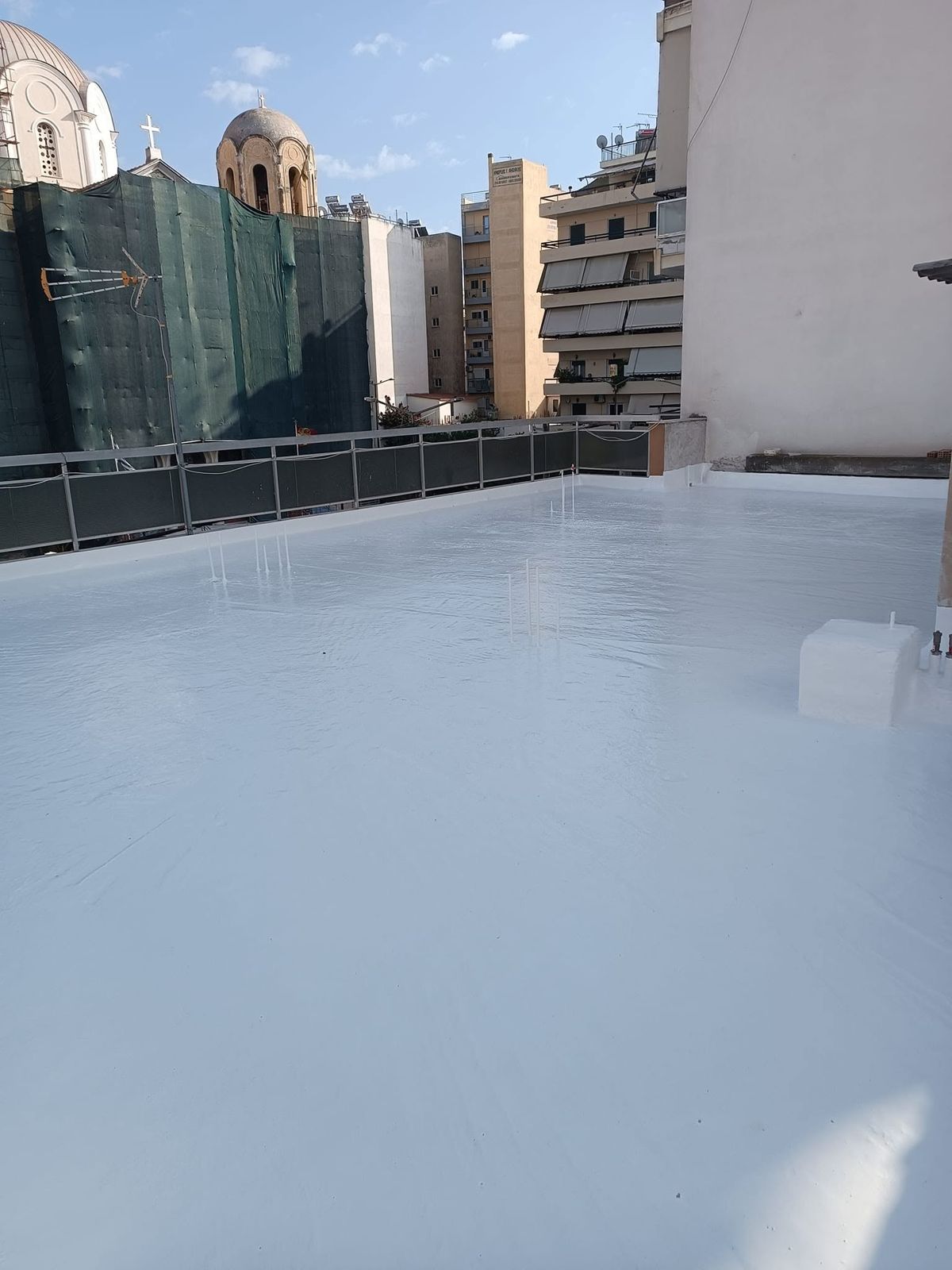
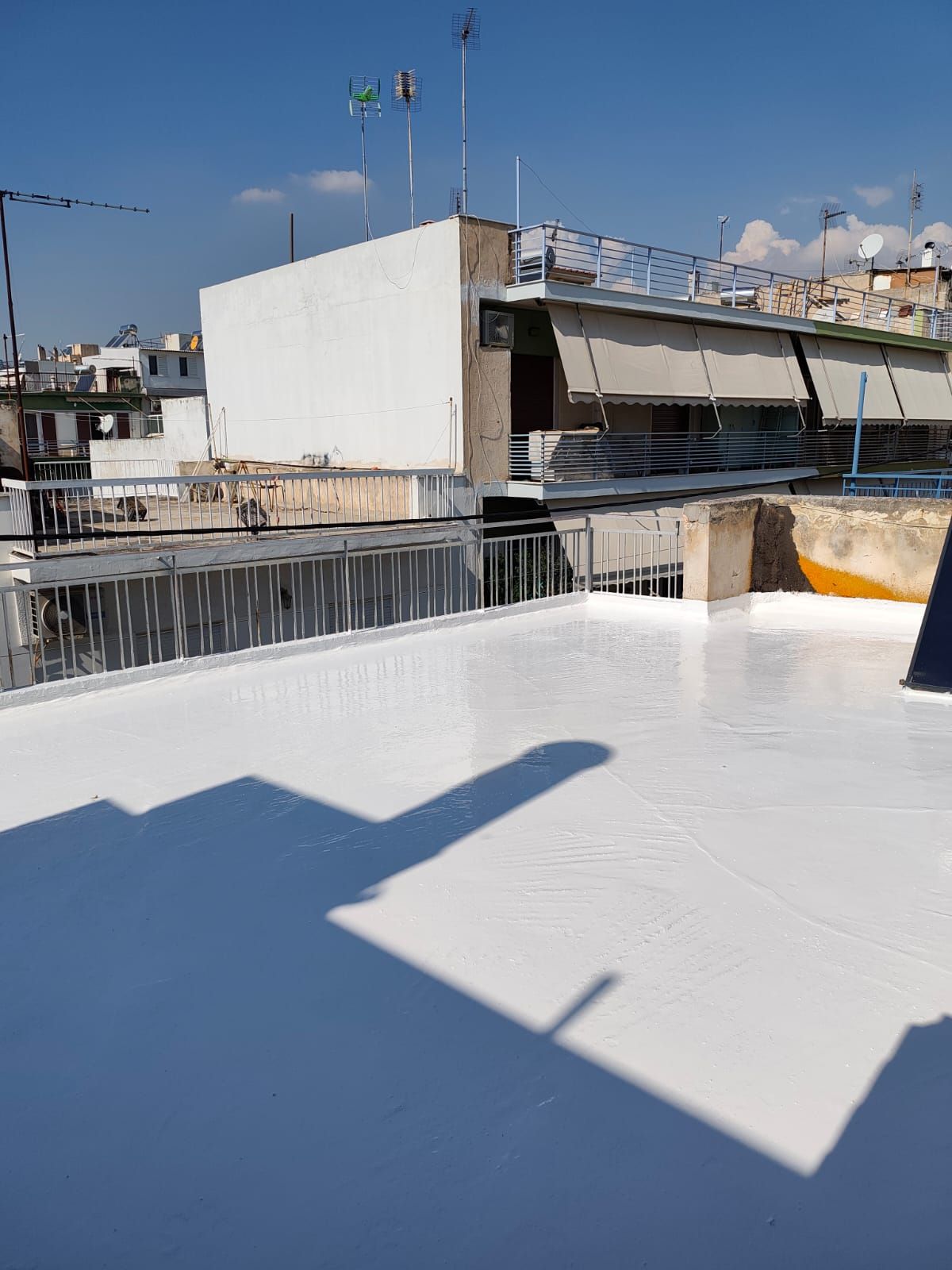
Apartment Terrace Waterproofed with a White Membrane - After
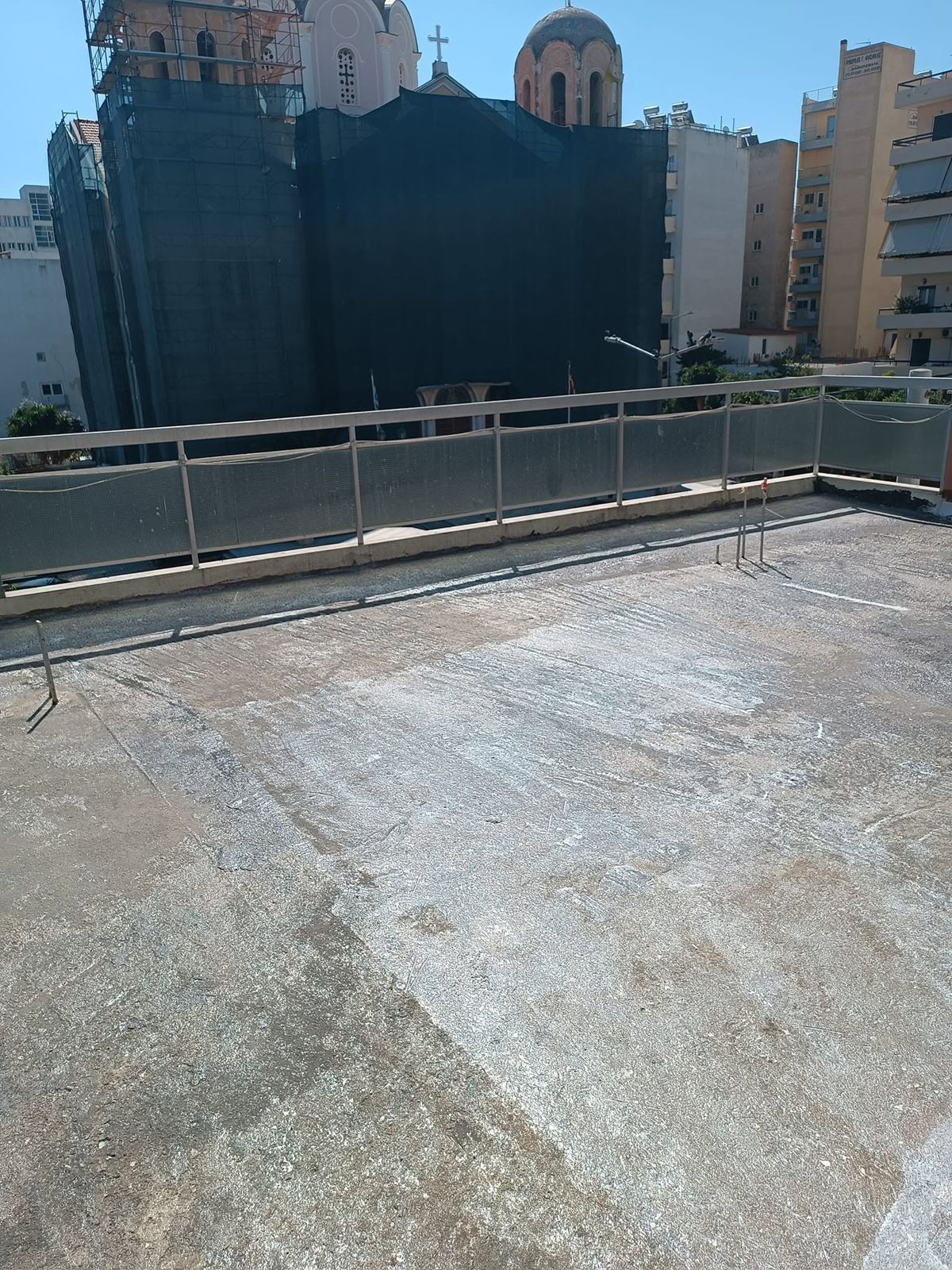
Apartment Terrace Waterproofed with a White Membrane - Before
BeforeAfter
Insulation

Apartment Terrace Waterproofed with a White Membrane

A worn, cracked terrace was cleaned and primed, its cracks were sealed, and it was coated with a white liquid waterproofing membrane.

See the job step by step
A Roof Terrace with Cracks and a White Coating - After
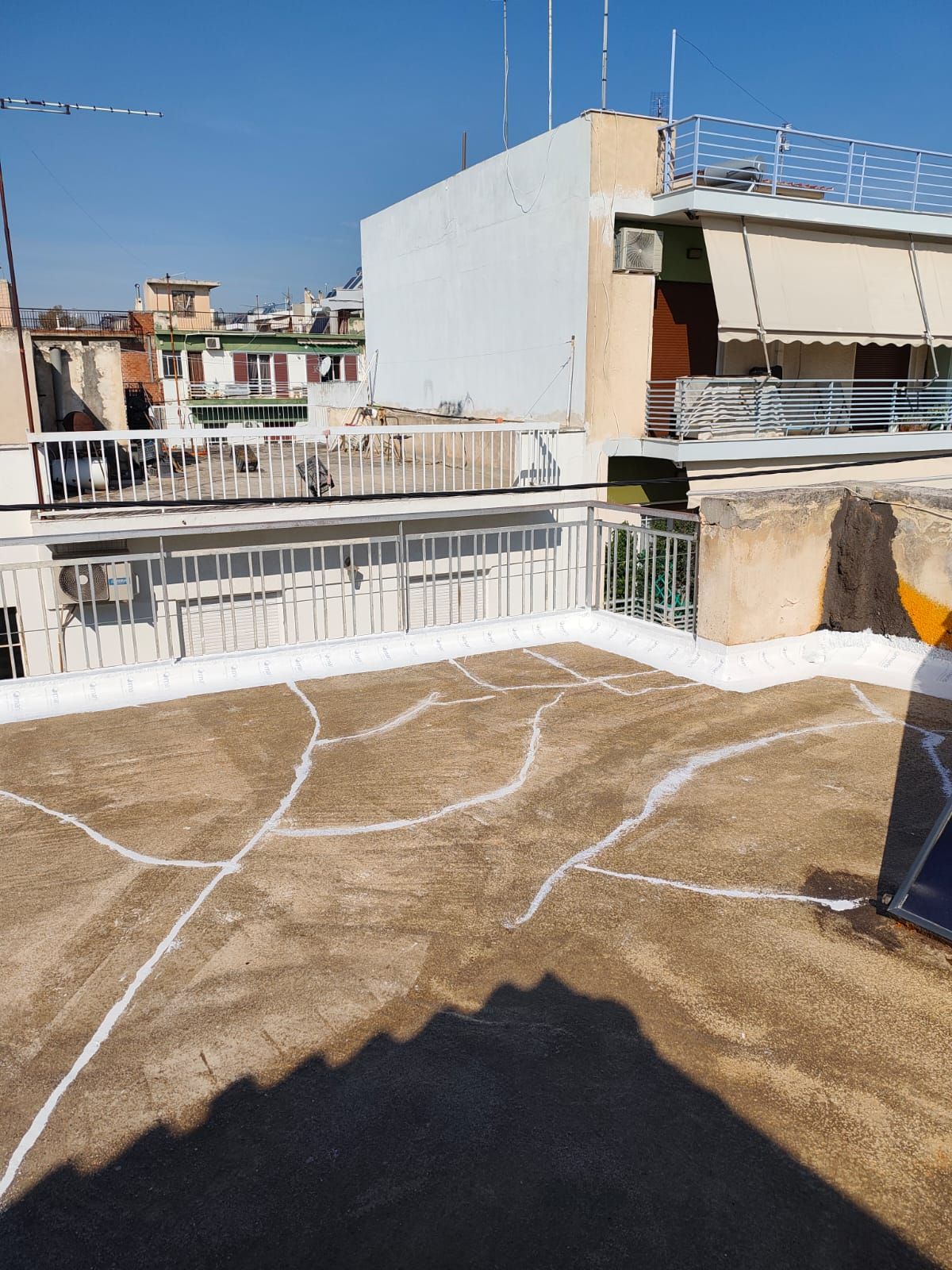
A Roof Terrace with Cracks and a White Coating - Before
BeforeAfter
Insulation

A Roof Terrace with Cracks and a White Coating

A roof terrace with cracks in its surface was covered with a white coating across its whole area, right up to the parapets and railings.

See the job step by step
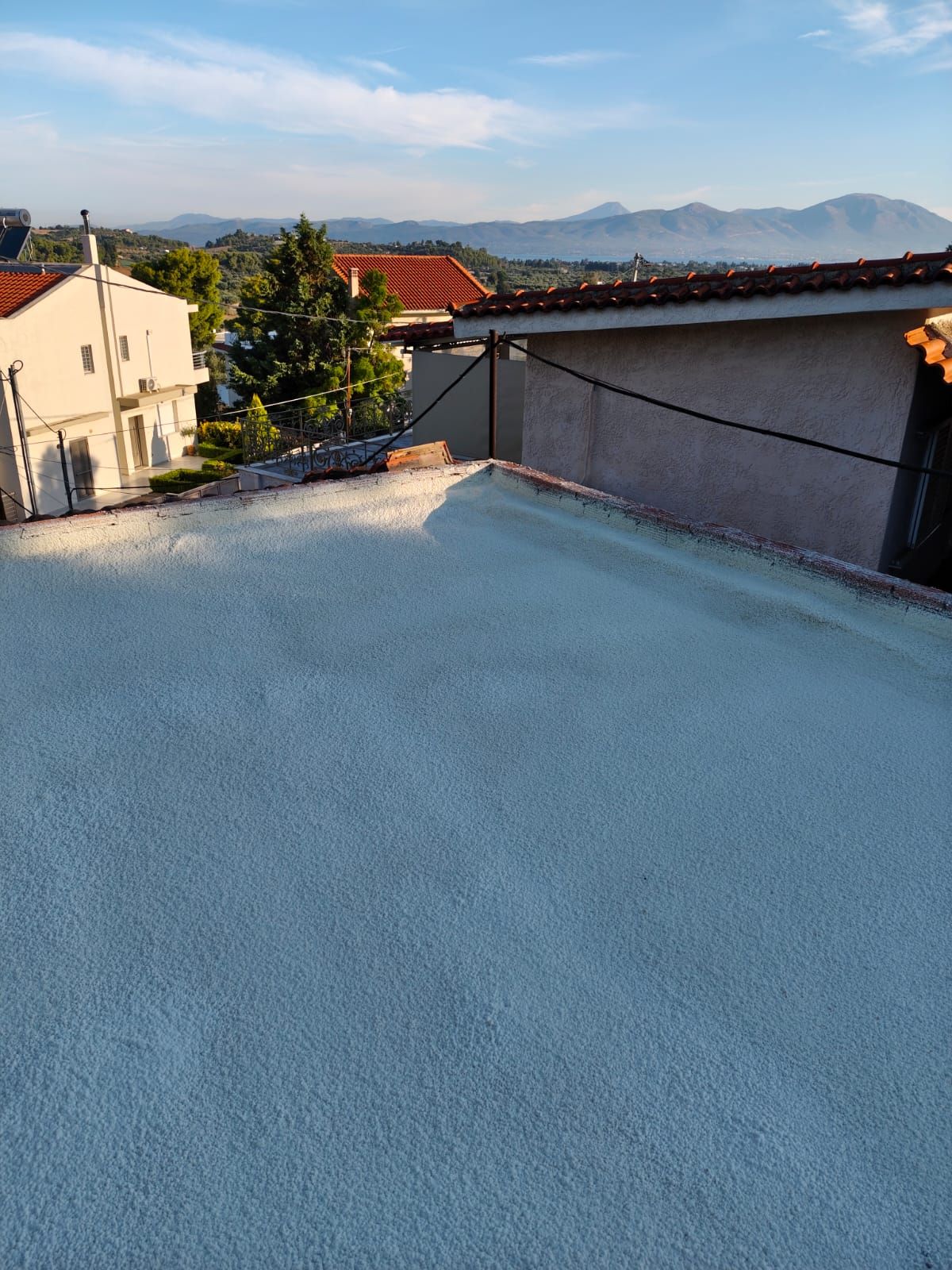
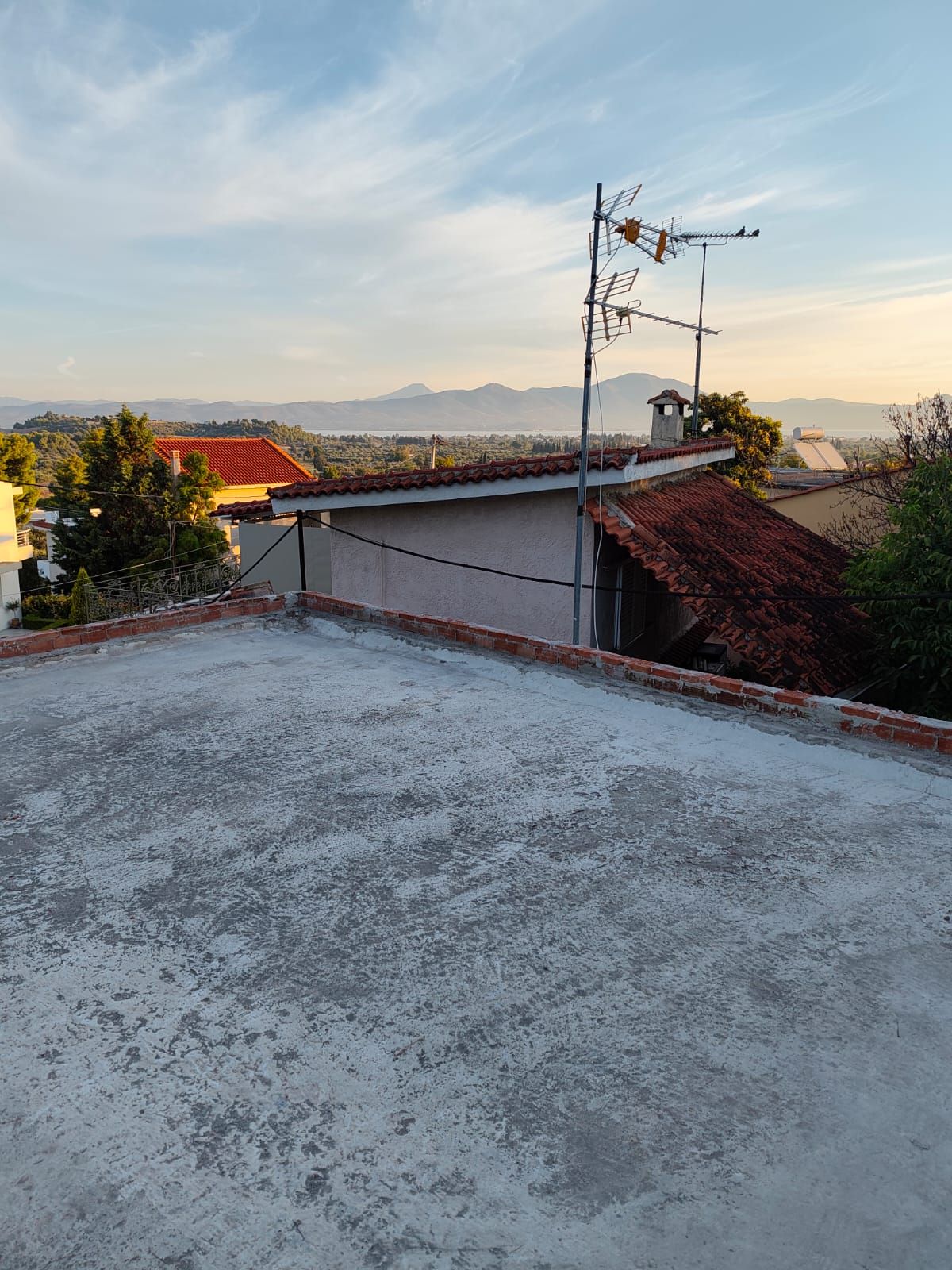
A Roof Terrace with a New White Coating - After
A Roof Terrace with a New White Coating - Before
BeforeAfter
Insulation

A Roof Terrace with a New White Coating

A roof terrace with an old, worn surface was covered first with a grey layer and then with a white coating across its whole area.

See the job step by step
693 334 7282WhatsApp