Thermal bridge
In other languages: Θερμογέφυρα
A spot in a building where heat and cold pass more easily than through the rest of the wall or slab, such as columns, beams and the edges of a slab.
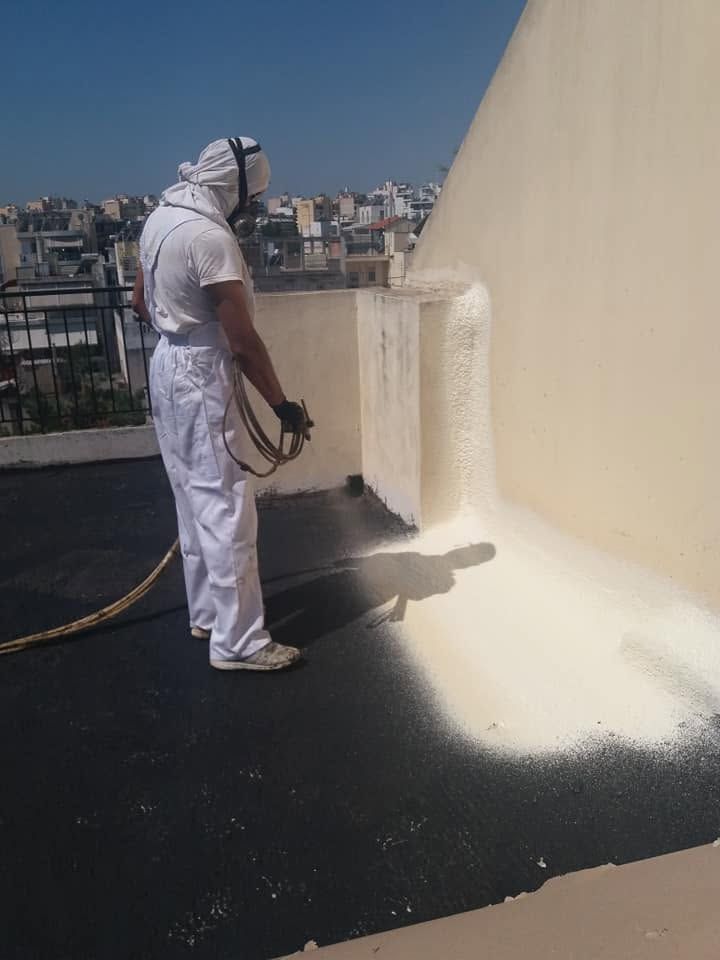
A building loses heat mainly through its weakest spots. Concrete columns and beams, the edges of a slab, balcony slabs that carry on outwards and the corners where wall meets ceiling all carry heat more easily than the rest of the wall. The same happens wherever insulation stops or leaves gaps.
In winter these spots are colder on the inside. The moisture in the air of the home turns to water on them, and that is where mould often appears: in the corners of the ceiling, around windows, in a strip along a beam. Mould like this isn't caused by a leak but by condensation.
Insulation that runs continuously over these spots reduces them. External wall insulation covers the columns as well, and spray polyurethane foam runs up the parapets and covers the edges of the slab. When you discuss insulation, it's worth asking exactly where it will stop.
Where you'll see it
- Quick answersCan sprayed polyurethane foam be used on the exterior walls of a new build before plastering, or on an interior ceiling?
- Spray Polyurethane Foam: Flat Roofs, Metal Roofs and Pilotis CeilingsWhat It Is and Where It Goes
- Damp and Fire-Damaged Rooms: The Work Before the PaintReading the Damage
Related terms
Thermal insulationCondensationExternal wall insulation (ETICS)Spray polyurethane foam