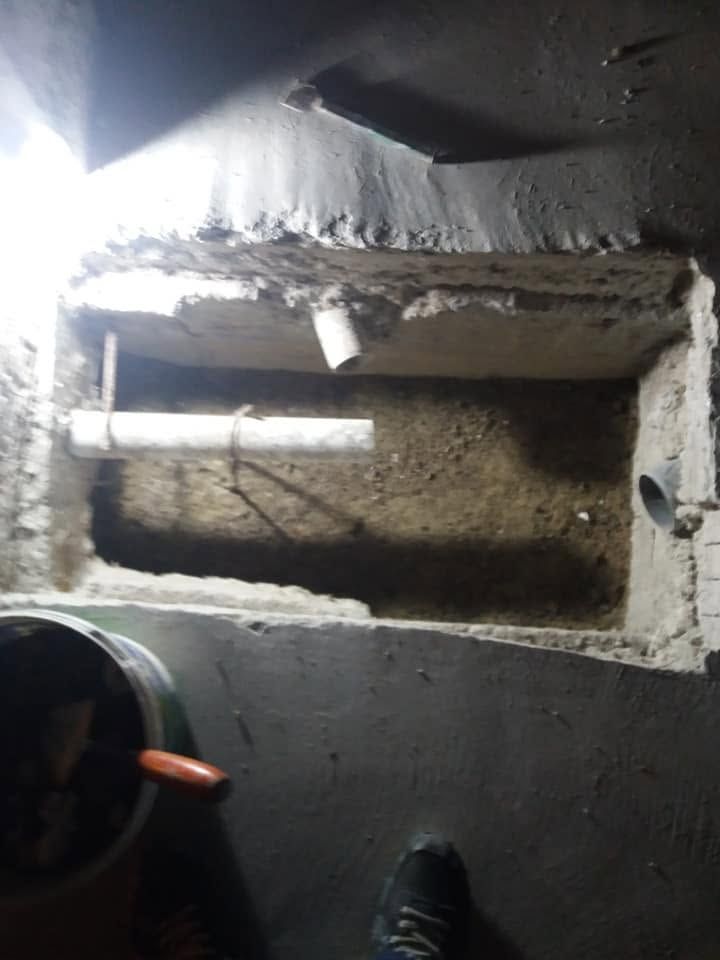
An inspection pit is a small chamber in the ground, with a cover or grate, where drain or rainwater pipesGutter and downpipeThe channel and pipe that collect rainwater from a roof and carry it down to the ground or the drains. meet. They are found in yards, under pilotisPilotis (open ground floor)The open ground floor under a block of flats, standing on columns with no walls, usually used for parking or as the entrance., in pavements and in planters, and they let a plumber see whether water is flowing and clear a blocked line.
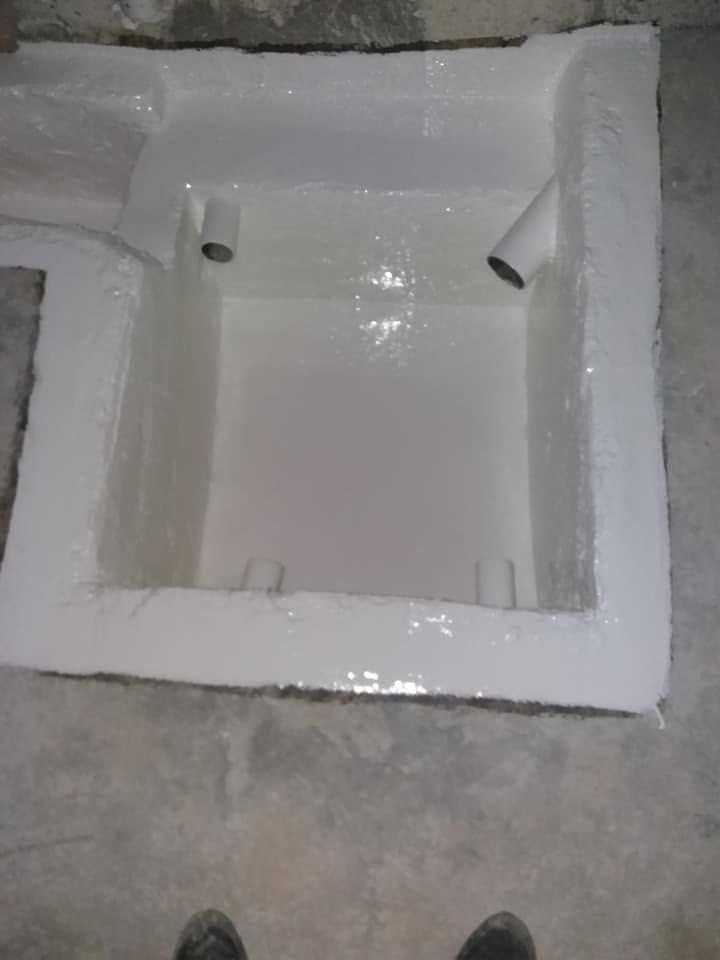
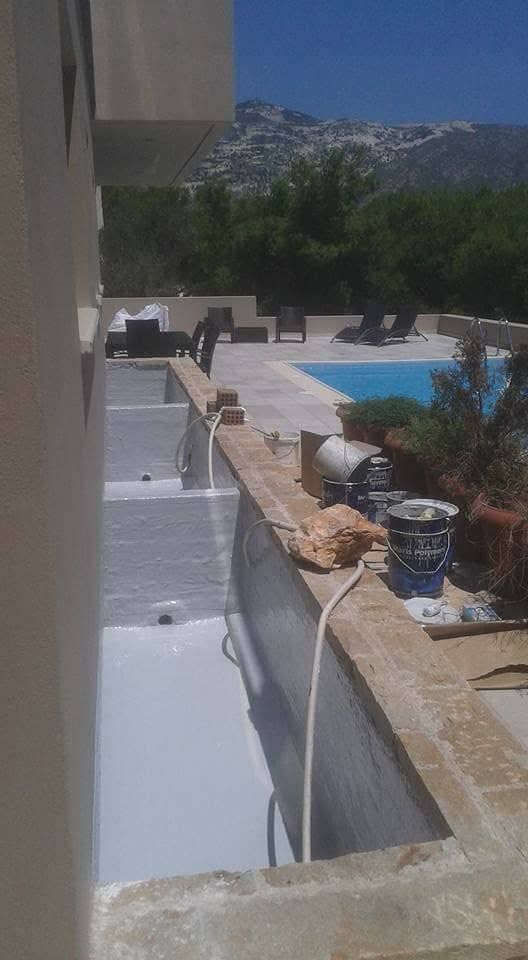
A pit needs to be watertight. If its walls or floor are crackedCrackA split or gap in render, concrete, a wall, a coating or wood. Fine cracks are usually only on the surface; ones that grow, keep reopening or run diagonally need attention., or the pipes come in without a seal, water escapes into the ground, dampens foundations and walls, and can bring smells. Concrete pits are waterproofedWaterproofingThe work and materials that stop water getting through on flat roofs, balconies, bathrooms, basements, planters and tanks. from inside with a brush-on waterproofing, worked carefully around every pipe.
The cover must stay accessible: a pit that has been tiled or concreted over can't be opened when it's needed. If it smells or the water rises inside the pit, something is usually blocked further down the line.
Related terms
Floor drainFloor drainThe outlet in a floor where water drains away on roofs, balconies and in bathrooms, with a grate on top and usually a trap below.WaterproofingWaterproofingThe work and materials that stop water getting through on flat roofs, balconies, bathrooms, basements, planters and tanks.Liquid waterproofing membraneLiquid waterproofing membraneA waterproofing product applied as a liquid by roller, brush or spray. Once dry it forms one continuous, flexible membrane with no seams.